Answer engine optimization for B2B SaaS: the outbound playbook for the AI answer era
Answer engine optimization means publishing the pages, facts, and proof that ChatGPT, Gemini, and Perplexity cite when buyers ask purchase-intent questions, then feeding those insights into outbound. Visibility sets the table; outbound books the meeting.
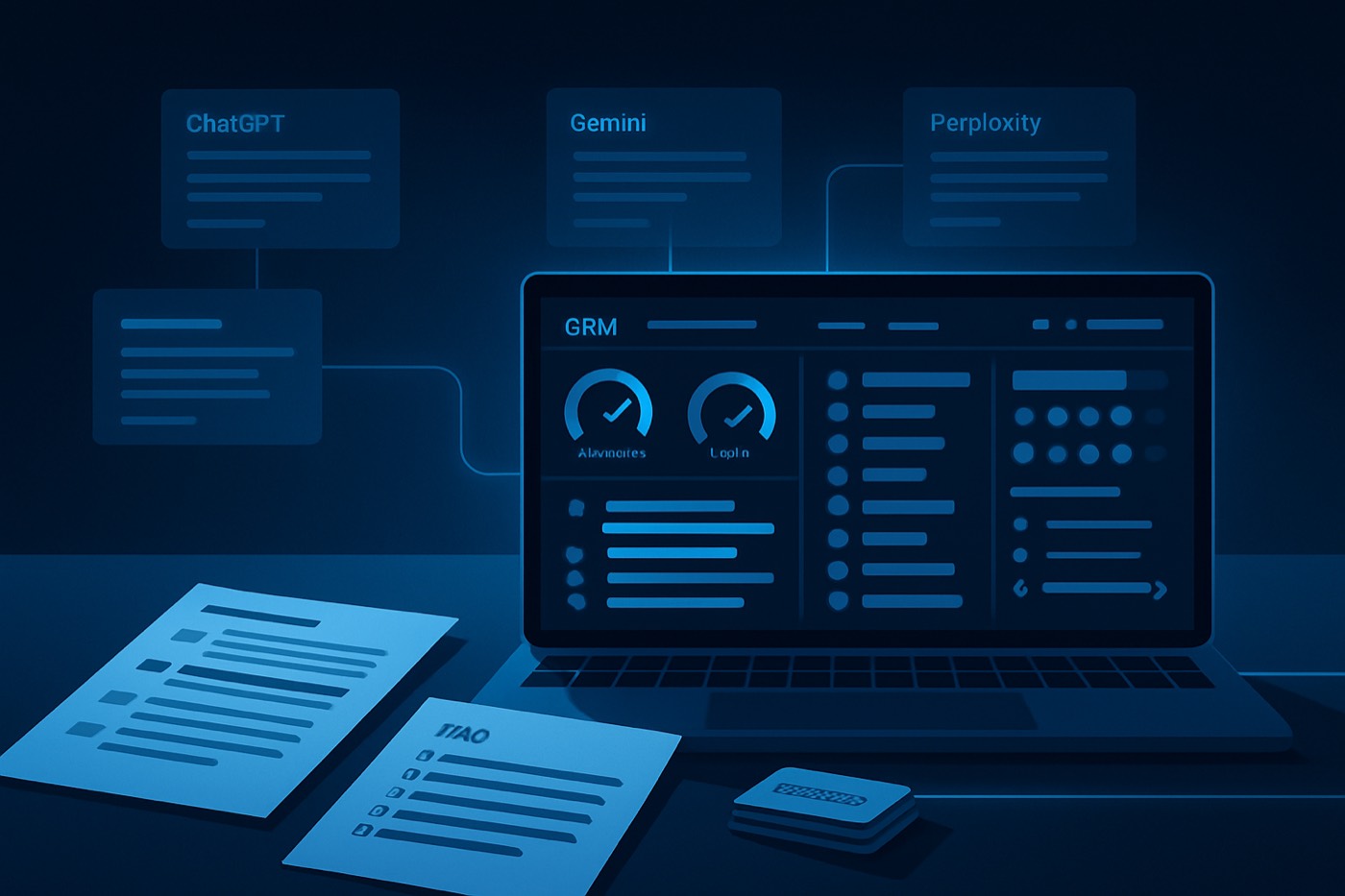
Buyers stopped browsing. They ask.
They ask ChatGPT. They ask Gemini. They ask Perplexity. They read Google AI Overviews. Then they show up on your site already opinionated, already shortlisting, already skeptical. The first impression of your brand is now formed somewhere you cannot see, by a model summarizing pages you may not even know it read.
That is the shift behind every "AEO" conversation. Answer engine optimization is not a new marketing fad bolted onto SEO. It is a distribution change. And tooling has caught up to it: HubSpot, for example, now ships an AEO feature inside Marketing Hub that measures and tracks how often a brand shows up in AI responses, framing the work as structuring content so answer engines can discover and cite it. (hubspot.com)
Measurement is good. But a dashboard does not book meetings. This is the playbook for the part most teams skip: building the assets answer engines pull from, standardizing the facts they keep mangling, and then turning what you learn into cold outbound that actually lands.
The shift: from search results to answers
When an AI summary sits at the top of a results page, fewer people click through. Pew's metered browsing study of 900 U.S. adults (March 2025) found exactly that. Coverage of the data put click-through at roughly 8% when an AI summary was present versus about 15% without one. (emarketer.com)
The footprint expanded fast, too. A 2026 analysis of AI search found that exposure to Google AI Overviews grew from 7 to 229 countries between 2024 and 2025, based on roughly 2.8 million results across 24,000 queries. (arxiv.org)
So "wait and see" is not a strategy. Your buyers already moved into the answer box. The only question is whether the answer mentions you, and whether it gets the facts right.
Define it clearly: answer engine optimization for B2B SaaS
Answer engine optimization for B2B SaaS means three things:
- Publishing the pages answer engines cite when prospects ask purchase-intent questions.
- Standardizing the facts those engines need to answer accurately.
- Measuring visibility in AI answers, then feeding the learnings into pipeline motions, especially outbound.
SEO chased rankings. AEO chases mentions, citations, and accurate summaries across ChatGPT-style assistants and AI-first search. The work overlaps with SEO, but the target moved: you are optimizing to be quoted, not to be ranked tenth.
Why answer-box visibility raises the stakes for outbound
Here is the uncomfortable part. If a buyer asks "best tool for X" and gets a shortlist, your brand is either on it or invisible. When you are absent from the answer, outbound gets harder and more expensive, because you are reaching out cold to someone who has already formed a shortlist that does not include you.
That is why visibility and outbound are not separate motions. Visibility decides whether your cold email lands on someone who recognizes the name or someone who has never heard of you. Both are workable. They are not the same conversation.
AEO without outbound is just vibes
Being cited will not save sales-led growth by itself. Even when the answer engine mentions you, the buyer still does what buyers do:
- stalls,
- delegates the research,
- compares you to three tools you did not choose,
- "circles back next quarter."
Outbound is the forcing function. It turns passive visibility into a conversation with a date attached. AEO sets the table. Outbound is what actually gets people to sit down at it.
The outbound playbook for the AI answer era
This is the part people skip. They obsess over "being cited," then wonder why pipeline stayed flat.
Step 1: build the pages answer engines pull from
If you sell B2B SaaS, answer engines keep pulling the same categories of pages. Build them deliberately. Keep them current. Make them easy to quote. Here is the minimum set.
1) Integration pages (one per integration)
Prospects ask:
- "Does [Product] integrate with [Tool]?"
- "How does [Product] work with Salesforce, HubSpot, or Slack?"
- "What data syncs?"
Each integration page needs a two-sentence definition of the integration, what syncs (objects, fields, direction), a setup time range ("30 to 60 minutes" if true), limitations (rate limits, required plan), and a basic setup checklist with screenshots. Answer engines reward crisp constraints. Vague claims get ignored or misquoted.
2) Pricing explainer page (not just your pricing table)
Most SaaS pricing pages are designed to start a sales conversation, not to inform. AI answers prefer clarity. Your pricing explainer should cover who each tier is for, the main cost drivers, typical ranges by company size, what is included versus a paid add-on, and procurement FAQs (annual versus monthly, invoicing, security review).
If you refuse to publish numbers, publish ranges and decision criteria. Otherwise the model will guess, the guess will be wrong, and the buyer will believe it anyway.
3) Comparison pages (one per competitor)
Build the pages buyers literally ask for: "[You] vs [Competitor]" for each tool you regularly come up against. Make them specific:
- 5 to 7 feature categories that actually matter,
- 3 deal-breakers where you win,
- 2 honest trade-offs where they win.
One line of contrast per row, no theatrics. Buyers want fast sorting, not brand therapy. When the comparison is relevant, link your own:
- Chronic vs HubSpot
- Chronic vs Salesforce
- Chronic vs Apollo
- Chronic vs Pipedrive
- Chronic vs Attio
- Chronic vs Close
4) Security and compliance page (plus subpages)
AI answers get conservative on risk. If you do not publish security facts, the model defaults to "unknown," which buyers read as "no." At minimum: SOC 2 status, data retention basics, subprocessors, SSO support, encryption basics, where data is stored, and how to request a security package. A short security FAQ in direct question-and-answer format helps; models read that structure cleanly.
5) Customer proof that is not a logo zoo
Answer engines cite specifics. "Trusted by 5,000+" is noise. Publish 6 to 10 mini case studies with numbers, 3 quotes that carry a role, company, and outcome, and one "how we got there" breakdown for your strongest segment. If you want AEO credibility, publish proof that can be repeated without embarrassment.
Step 2: standardize the facts answer engines keep mangling
Your biggest AEO problem is usually not ranking. It is inconsistent facts. The model finds three different setup times and two different price points across your own site, and it picks one at random. Standardize the essentials in a single source of truth and mirror them everywhere.
The fact pack for B2B SaaS:
- ICP definition: industry, employee range, tech environment, and explicit "not a fit" criteria.
- Implementation time: best case, typical, worst case, and what makes it longer.
- Pricing ranges: entry range, common mid-market range, enterprise drivers.
- Time-to-first-value: for example, "first meetings booked in 14 days" only if you can prove it.
- Key differentiators: three measurable bullets, no more.
If your own site cannot keep these straight, no model will.
Step 3: measure what matters, not what is easy
Traffic is fine. Pipeline is better. Here are the metrics that map to revenue in the AI answer era.
Prompt share
The percentage of tracked prompts where your brand appears in the answer. Track prompt sets by intent: "best [category] for [ICP]," "alternatives to [competitor]," "does [brand] do [capability]," "pricing for [category]," "SOC 2 [category]."
Citation frequency
How often your pages get cited, not just mentioned. Citations are stickier than mentions. Mentions drift between sessions; a citation anchors to a page you control.
Branded query lift
Growth in searches for "[Brand] pricing," "[Brand] reviews," "[Brand] vs." AI answers create curiosity, and the "search to click to site" path weakens when summaries answer the question in place. That makes branded queries a cleaner proxy for demand the answer engine created. (emarketer.com)
Demo intent from AI referrals
In GA4, break out sources like chatgpt.com, perplexity.ai, gemini.google.com, and copilot.microsoft.com. Then track demo page views, pricing explainer views, security page views, and "book a demo" conversions from each. AI referral traffic is still small relative to traditional search, but trade coverage has documented it growing. (digiday.com)
Where AEO becomes outbound ammo
Here is the move most teams miss. AEO tells you:
- which questions your market actually asks,
- which competitors keep showing up next to you,
- which proof points get repeated,
- which misconceptions keep appearing.
That is not just content strategy. That is targeting, messaging, and proof for outbound.
Use AEO insights to pick accounts
If your prompts show your brand appears most for "best outbound tool for agencies" and not for "best outbound tool for Series B SaaS," stop spraying Series B SaaS with generic "we do outbound" emails. Aim where the model already associates you with the job to be done, and treat the gap as a separate, deliberate campaign rather than the default.
Use AEO insights to pick angles
Build outbound angles that mirror the phrases answer engines repeat back. If AI answers describe you as handling outbound end to end, your cold email angle should not be "we have AI." It should be the specific claim the model already makes on your behalf, backed by a proof asset that is easy to cite. Want a cleaner starting point? Build angles off triggers: the trigger engine: 25 real-time outbound signals.
Use AEO insights to pick proof points
If your AEO results show engines citing your security page, your comparison pages, and your pricing explainer, then your cold email should link the same assets. Do not make the prospect work. Match the research path they are already on.
And none of this matters if the email never arrives. If your deliverability is poor, no one reads the message regardless of how sharp the angle is. Run a real checklist: cold email deliverability monitoring (2026): the daily checklist.
The "pages to build" checklist
If you want an AEO-ready outbound stack, build this set and treat it like product, not like a blog.
Highest priority (build now):
- Comparison pages for your top 5 competitors
- Pricing explainer page with ranges
- Security page with SOC 2 status and a controls summary
- 6 to 10 mini case studies with numbers
- Your top 10 integration pages
Second priority (build next):
- An implementation page (timeline, steps, responsibilities)
- A "who we are not for" page (qualifies fast, reduces churn)
- A "how it works" page with a simple workflow diagram
- An ROI model page with assumptions spelled out
If you sell outbound, your "how it works" should not be abstract. Show the system end to end: ICP, enrichment, scoring, message writing, reply handling, meeting booked.
Chronic maps to exactly that workflow, because Chronic is the operator running it rather than another tool you log into. You set the revenue goal, the offer, the budget, and the approval level; the agent finds the leads, writes and sends cold email from managed, warmed mailboxes, handles the replies, and books the meeting, surfacing only the decisions that need you:
How to turn AEO dashboards into booked meetings
Measurement is not motion. Here is the motion, run like a weekly operating rhythm rather than a quarterly content sprint.
Weekly: run the AEO report
Inputs: your top 50 prompts by intent, your brand mentions and citations, competitor presence, and the list of missing or wrong facts. Outputs: 3 assets to update and 2 outbound angles to ship. That is it.
Update 3 assets every week
Pick from: a comparison page, the pricing explainer FAQ, an integration page's setup time and limitations, the security FAQ, or one mini case study. Do not "refresh the blog." Fix the assets answer engines actually cite.
Push 2 outbound angles every week
Use a simple format: trigger, problem, proof, ask.
Trigger: "Saw you're hiring 2 SDRs."
Problem: "Most teams hire SDRs to do research and list building."
Proof: "We run ICP to enrichment to sequences to booked meetings end to end."
Ask: "Worth 10 minutes to see if we can book meetings before those hires start?"Trigger: "Noticed you run HubSpot plus Apollo."
Problem: "Tools multiply, ownership disappears, replies sit unanswered."
Proof: "One operator owns the flow from list to meeting, not five disconnected apps."
Ask: "If I send a 60-second teardown of your current stack, worth a look?"
Then link the asset the model already likes. That is the whole point of the loop.
For the fit-plus-intent scoring that decides which accounts get which angle, steal the framework: dual scoring in 2026: fit plus intent.
Prospecting agents reset the buyer's expectations
The most useful side effect of vendors shipping prospecting agents is that buyers' expectations move. Once a buyer has seen an AI agent use account context and external signals to drive research, they expect faster research, tighter personalization, and fewer irrelevant emails from everyone, including you.
So your outbound has to get sharper, not longer. A generic "checking in" sequence reads worse than it used to.
This is also where "AI agent washing" shows up. Everyone says "agent," then ships an autocomplete box. Before you buy or build anything that calls itself an agent, run a real evaluation: AI agent washing is everywhere: 17 questions to ask.
The operator's stance on AEO tools
AEO tools are useful, and they are also dangerously comforting. They give you scores, dashboards, and green checks. They do not give you standardized facts, proof assets, outbound angles, or booked meetings. Use them as instrumentation. Then run the playbook.
FAQ
What is answer engine optimization for B2B SaaS, in one sentence?
It means publishing and maintaining the pages, facts, and proof that AI answer engines cite when buyers ask purchase-intent questions, then measuring that visibility and feeding it into pipeline actions, especially outbound.
Does AEO replace SEO?
No. It changes the surface area. You still need crawlable pages and authority, but you optimize for mentions and citations inside AI answers, not just rankings. The vendor framing of AEO matches this: structure content so AI platforms can discover and cite it. (hubspot.com)
What pages move the needle fastest for AEO in SaaS?
Comparison pages, a pricing explainer with ranges, a real security page, integration pages, and customer proof with numbers. These map directly to the questions buyers ask in ChatGPT, Gemini, Perplexity, and Google AI Overviews.
What metrics should we track if we want pipeline, not vanity?
Prompt share, citation frequency, branded query lift, and demo intent from AI referrals. Pew's metered browsing analysis is a useful reminder that AI summaries change click behavior, so visibility needs measurement that does not depend on the old click. (emarketer.com)
How does AEO make cold outbound better?
It tells you which questions the market asks, which competitors show up, and which proof points get repeated. Use that to pick accounts, choose angles, and link the assets AI already trusts. That turns random outreach into obvious relevance.
What is the simplest operating rhythm for a small team?
Weekly AEO report, then update 3 assets, then push 2 outbound angles. No heroics, no quarterly content sprints, just steady compounding.
Run the weekly loop, then take the meetings
The AI answer era is not coming. It is already routing your deals through summaries you do not control. So do the unglamorous work:
- Build the pages buyers and models pull from.
- Standardize the facts so the answers stop drifting.
- Measure prompt share and citations, not vibes.
- Turn what you learn into outbound angles that match the buyer's actual research.
Weekly AEO report, update 3 assets, push 2 outbound angles. Repeat until your pipeline runs like a system instead of a scramble.