Consensus Buying Saleo Is the Real Signal: The Demo Just Became Part of Outbound
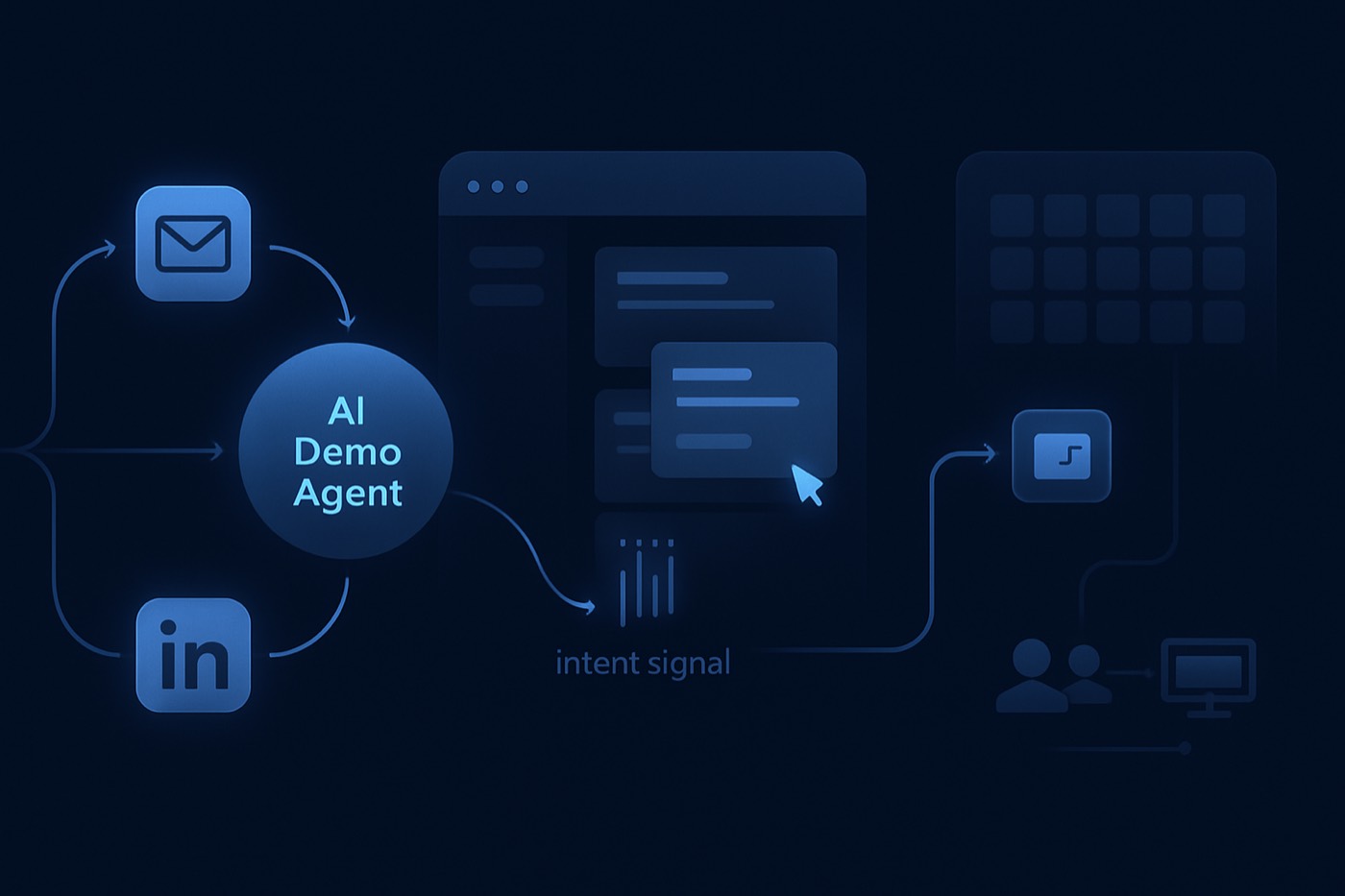
The June 9, 2026 Consensus Saleo acquisition is not “another demo tool roll-up.”
It is a pipeline rewrite.
Consensus just bought the missing piece that turns a demo from a late-stage sales event into an upstream outbound weapon. Saleo’s whole thing is running high-stakes demos in the native product with controlled, personalized data, plus autonomous demo experiences that run 24/7. Consensus brings the interactive demo layer and the buyer analytics spine. Together, they are building a single loop: outreach, demo, intent, follow-up, meeting. (goconsensus.com)
The signal: the SDR handoff is breaking. The old flow assumed a human would carry context from first touch into discovery, then into a demo, then into follow-up. That chain snaps constantly. This acquisition is a bet that the demo becomes the new “first real conversation,” and the system records everything the buyer does inside it.
TL;DR
- The Consensus Saleo acquisition pushes demo automation upstream, right into outbound. (goconsensus.com)
- The new flow looks like this: Outbound -> autonomous demo -> demo intent scored -> triggered follow-up -> booked meeting.
- Demo engagement data is shifting from “nice analytics” to system-of-record intent, because it captures what buyers actually care about, not what reps type into CRM notes.
- Ops changes: new routing rules, SLAs tied to demo intent, and follow-up triggers that fire off demo behavior, not “email opened.”
- What small teams should do next week: add demo-intent fields, build 3 follow-up plays, and stop treating demo as an SE-only asset.
What happened on June 9, 2026, and why it matters
Consensus announced it acquired Saleo on June 9, 2026, positioning the combined platform as an “agentic product experience” stack that unifies interactive demos, AI demo agents, conversational AI, and live demos, plus unified buyer intelligence. (goconsensus.com)
Translation: buyers get product access earlier, and revenue teams get telemetry earlier.
Saleo’s product focus is not a cute click-through tour. It is live demo execution in the native product, with tooling to inject tailored demo data so reps can show a buyer “their reality” without rebuilding environments. (goconsensus.com)
And Saleo has been pushing autonomous demos hard, including an “AI Demo Agent” that runs conversational demos 24/7. (saleo.io)
So no, this is not just “make demos easier.”
This is: make demos happen before humans get involved, then use demo behavior to drive the next step.
Consensus Saleo acquisition: why demo automation is moving upstream
Demos moved upstream for one reason.
Buyers moved downstream.
They do research without you. They evaluate without you. They loop in stakeholders without you. By the time your AE gets “discovery,” the buyer already has a mental shortlist.
Interactive demo platforms have been showing this in their own benchmark data for a while:
- Navattic reports demo-to-opportunity conversion can be 3x compared to isolated product pages, and they cite examples like prospects being 6x more likely to convert after viewing a demo (customer-reported via tools like HockeyStack). (navattic.com)
- Aragon Research recognized “Demo Automation” as a category and projected a $2.1B market by 2026, explicitly tying the rise to buyer expectations for digital, interactive experiences earlier in the funnel. (goconsensus.com)
That’s the macro trend. The Consensus Saleo acquisition is the tactical move.
The real driver: the SDR handoff is collapsing
The classic SDR model assumes:
- SDR creates interest.
- SDR hands off to AE.
- AE runs discovery.
- SE runs demo.
- AE follows up.
In reality:
- SDR books something that looks like interest.
- AE waits 3 days because calendar.
- Buyer goes cold or self-educates elsewhere.
- SE never gets clean context.
- Follow-up is generic because the notes are generic.
Your “handoff” is basically a polite way to lose deals.
The only fix is to reduce handoffs.
Putting the demo into outbound reduces handoffs because the buyer self-selects and self-qualifies through their behavior.
The new pipeline flow: outbound -> autonomous demo -> intent-scored follow-up -> booked meeting
This is the part most teams miss: demo automation is not the finish line. It is the trigger.
The new flow is operational, not inspirational:
- Outbound creates the first click
- Email, LinkedIn, paid retargeting, partner link, whatever.
- Autonomous demo starts immediately
- Not “book time.” Not “talk to sales.”
- It is “see it now.”
- Demo intent gets captured
- What screens they hit.
- What features they explore.
- How long they stay.
- Which stakeholders show up.
- Follow-up triggers fire based on demo intent
- Not based on opens.
- Not based on guessed persona fit.
- Meeting gets booked
- Only after the system has evidence of intent, fit, and buying committee motion.
Consensus already pushes the “buyer intelligence” story. Gartner Peer Insights even calls out Consensus “Demolytics” style analytics that show buyer engagement and intent signals. (gartner.com)
Saleo brings the live product and autonomous demo layer that makes those signals richer and closer to the real product experience. (goconsensus.com)
Consensus Saleo acquisition: demo intent becomes the new system-of-record
CRMs were built to log what your team did. Calls. Emails. Tasks. Notes.
That is “activity.”
It is not truth.
Demo intent is closer to truth because it captures buyer behavior with your product narrative, in sequence, with timestamps. And it captures the silent stakeholders who never reply to your emails but absolutely shape the decision.
Saleo’s own framing says demo automation has split into:
- Tools built for sellers to deliver better demos
- Tools built for buyers to evaluate on their terms
And those lived in separate systems. This acquisition is explicitly meant to unify them. (saleo.io)
Why demo intent beats classic lead scoring
Classic scoring is usually:
- firmographics (industry, size)
- email engagement (opens, clicks)
- maybe a website visit
That stuff is noisy. Especially opens.
Demo intent is higher signal:
- They chose to spend time in your product story.
- They touched specific workflows.
- They revisited.
- They forwarded it to someone else.
That is buying motion.
And it creates a new operational standard: follow-up based on “what they did,” not “what we sent.”
What changes in ops: routing, SLAs, and follow-up triggers
Most teams will bolt “demo analytics” onto their process and call it a day. That fails.
If you want the new flow, ops needs new plumbing.
1) Routing: send the right follow-up to the right owner
You need routing rules based on demo intent tiers, not job title.
Example routing model:
- Tier 1 demo intent: watched 60%+, hit pricing/ROI section, invited colleague
- Route to AE immediately
- Tier 2 demo intent: explored 1 use case deeply, no stakeholder share
- Route to SDR for tight follow-up and stakeholder mapping
- Tier 3 demo intent: bounced fast
- Keep in automated nurture, retarget later
This is where “system-of-record” matters. If demo intent lives in some presales tool nobody checks, nothing changes.
2) SLAs: stop measuring speed-to-lead, measure speed-to-context
“Speed-to-lead” is cute. It worked when inbound forms were the main event.
Now the SLA is: how fast did you respond with context that matches what they explored?
If someone spent 9 minutes in a security workflow inside the demo, and you follow up with “Want a quick call?”, you deserve the ghost.
3) Follow-up triggers: fire actions off demo behavior
Minimum viable trigger set:
- Visited integration screen -> send integration proof
- Spent time on reporting dashboard -> send reporting workflow + 2 customer outcomes
- Invited teammate -> launch buying committee play (multi-thread)
This is the same idea we push in outbound: signals trigger the next step. Chronic writes and runs those next steps end-to-end, till the meeting is booked. Pipeline on autopilot.
If you want the intent layer to actually book meetings, connect it to execution.
What small teams should do next week (not next quarter)
You do not need a replatform. You need three tight moves.
1) Add demo-intent fields to your CRM this week
Create fields that match how you will route and follow up.
Minimum set:
- Demo intent score (0-100 or Low/Med/High)
- Top demo topic (Security, Integrations, Reporting, Admin, Workflow A, Workflow B)
- Stakeholders detected (count, or list if you can capture emails)
- Last demo engaged date
- Demo type (autonomous, interactive tour, live)
If you run Chronic, mirror these fields in your pipeline so the agent can prioritize and execute follow-up automatically in the right lane. Start with the basics in your sales pipeline workflow.
2) Build 3 follow-up plays tied to demo intent
Do not overbuild. Three plays cover most teams.
Play A: High intent, single-thread
- Trigger: High demo intent, no stakeholder share
- Goal: book meeting and expand thread
- Steps:
- Email: “Saw you spent time on X, here’s the 90-second version for Y outcome”
- Day 2: ask one sharp question tied to the workflow they viewed
- Day 4: send mini proof point + direct CTA to book
Play B: High intent, multi-thread
- Trigger: invited teammate, multiple viewers
- Goal: control the buying committee
- Steps:
- Email to primary: “looks like this got shared, want a 15-min alignment call with you + whoever’s evaluating?”
- Separate email to stakeholder if you have it: “You looked at X, here’s the security/integration detail”
- Calendar link only after context
Play C: Medium intent, unfinished evaluation
- Trigger: explored one area, bounced
- Goal: restart engagement without begging
- Steps:
- Email: “Most teams miss X step, here’s the clickable path”
- Day 3: send alternate use case branch
- Day 7: “Should I close the loop or route this to your technical evaluator?”
Chronic’s AI Email Writer can generate these sequences personalized to the demo topic, not generic persona fluff.
3) Stop treating demo as an SE-only asset
SE time is expensive. Also finite. Also not the bottleneck you think it is.
The bottleneck is: buyers waiting.
Saleo’s positioning is explicit about removing the “wait for a demo” problem with an always-on agent. (martechedge.com)
Your policy next week:
- Marketing can distribute demos.
- SDR can send demos in outbound.
- AE can follow up based on demo behavior.
- SE focuses on edge-case technical validation, not “walkthrough number 47.”
The outbound implication: personalization shifts from “about them” to “about what they did”
Most outbound teams still chase “personalization” like it is 2019. “Congrats on the funding.” “Loved your post.” “Noticed you’re hiring.”
Cute. Low signal.
Demo-led outbound creates real personalization:
- “You spent 4 minutes in the integration flow.”
- “Two people from your domain hit the security section.”
- “You replayed the ROI workflow.”
That is not creepy. That is relevant.
If you want more on signal-driven outbound, this pairs with:
- 7 timing signals that beat personalization in 2026
- The 2026 outbound scorecard: 25 signals that predict meetings
Now add demo intent as a first-class signal.
And score it.
Chronic runs dual scoring so your follow-up targets the right accounts at the right time. See AI lead scoring.
One clean contrast: legacy CRM vs agentic stacks
Legacy CRMs track activities. Agentic stacks execute the next step.
That’s the whole shift.
The Consensus Saleo acquisition matters because it pushes one of the richest intent streams (demo behavior) upstream, where agentic execution can actually use it.
Where Chronic fits: execute the loop, not the dashboard
Most teams will buy demo tooling, then stare at charts.
Pipeline does not come from charts.
Pipeline comes from:
- identifying the right accounts,
- enriching contacts,
- sending the right message,
- reacting to signals,
- booking meetings.
Chronic does that end-to-end.
- Define and tighten your ICP with the ICP builder.
- Auto-enrich leads with lead enrichment.
- Score and prioritize with AI lead scoring.
- Run sequences with the AI email writer.
- Move deals through a real system in the sales pipeline.
The demo layer is getting smarter. Good.
Now your follow-up has to get ruthless.
FAQ
What is the Consensus Saleo acquisition?
On June 9, 2026, Consensus announced it acquired Saleo, combining Consensus’s product experience and buyer intelligence approach with Saleo’s AI-native live demo platform and autonomous demo capabilities. (goconsensus.com)
Why does this acquisition matter for outbound pipeline?
It pushes demos upstream into outbound. Instead of “email -> discovery -> demo,” the flow becomes “outbound -> autonomous demo -> intent-scored follow-up -> meeting.” That reduces handoffs and creates better intent signals earlier.
What is “demo intent,” in plain terms?
Demo intent is the behavioral data a buyer generates while interacting with a product demo: what they viewed, how long they stayed, what they repeated, what they shared, and which stakeholders engaged. Consensus positions this as buyer intelligence through demo analytics. (gartner.com)
What are the first operational changes RevOps should make?
Start with:
- demo-intent fields in CRM (score, topic, stakeholders, last engaged)
- routing rules based on intent tiers
- SLAs tied to “speed-to-context,” not just speed-to-lead
- triggers that fire follow-up plays off demo behavior
Do small teams need a presales org to benefit from demo automation?
No. In fact, small teams benefit more because SE time is scarce. The point of autonomous demos is to cover the “always on” part of evaluation, then route high-intent buyers to a human at the right moment. (martechedge.com)
How do interactive demos impact conversion or pipeline?
Navattic’s 2025 report cites examples where demo-to-opportunity conversion is reported as 3x compared to isolated product pages, and some teams report prospects are 6x more likely to convert after viewing a demo (customer-reported). (navattic.com)
Ship the new flow in 7 days
Day 1: Add demo-intent fields.
Day 2: Define intent tiers (High, Medium, Low).
Day 3: Build the 3 follow-up plays.
Day 4: Wire triggers to route and execute plays.
Day 5: Put demos into outbound sequences.
Day 6: Review the first 20 demo-intent records, refine scoring.
Day 7: Kill any follow-up template that does not reference what the buyer actually did.
The SDR handoff is breaking. Good.
Outbound just got a new middle step. Treat demo intent like gold, because it is the closest thing you have to the buyer’s brain without reading it.