Precision selling: the practical playbook (signals, priorities, next actions)
Precision selling turns five signal families (fit, intent, timing, engagement, and deliverability health) into a score and a forced next action, so the right account gets the right move at the right time, every time.
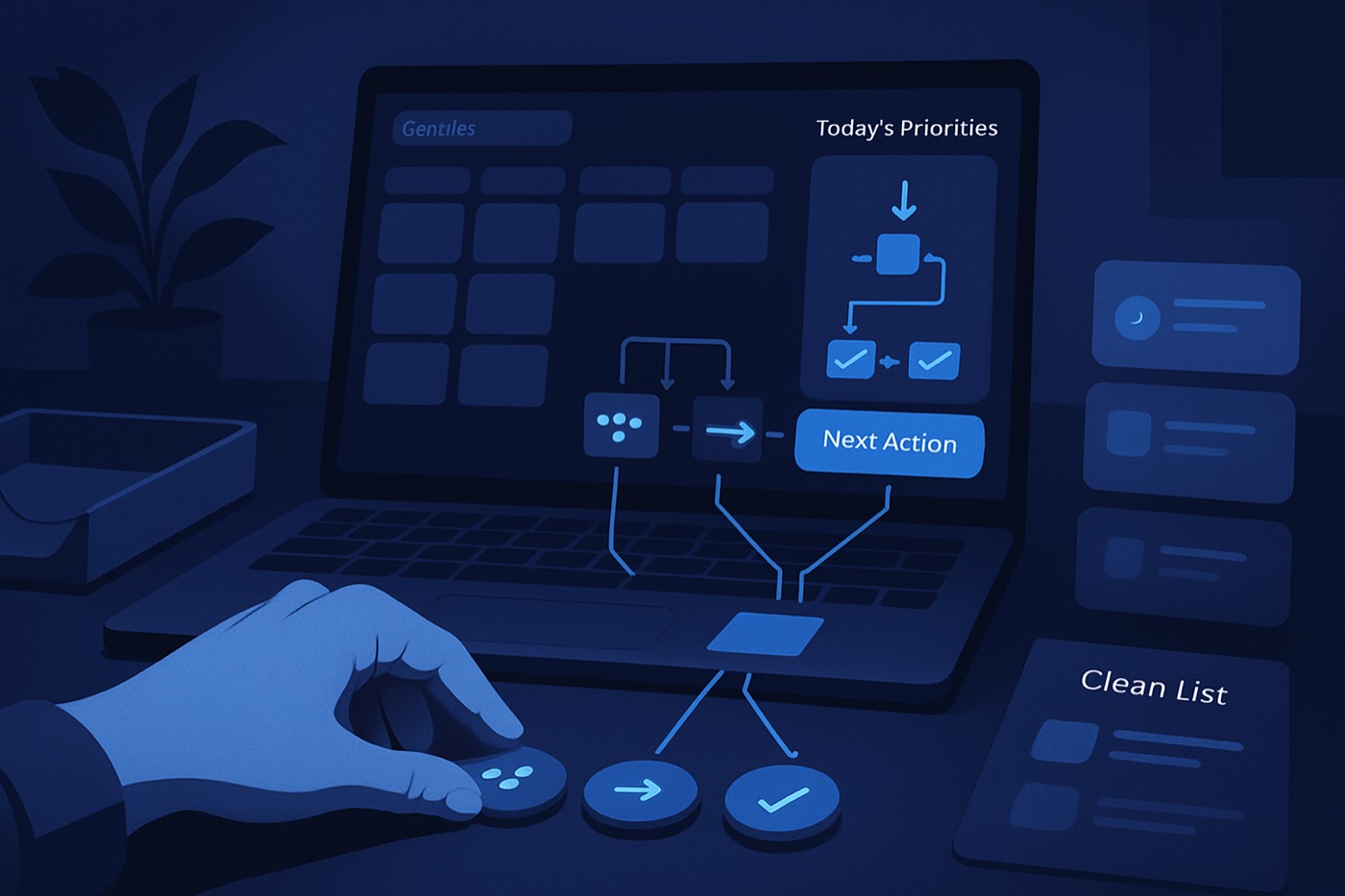
Precision selling means one thing: the right action lands on the right account at the right time, every time. Not because a rep is a savant. Because the system refuses to let the work get sloppy.
Precision selling (definition): what it is, and what it is not
Precision selling is a way of running outbound where the work is driven by signals, not by mood. A precision selling system continuously:
- Detects signals across accounts and contacts.
- Converts those signals into priorities (who matters now).
- Triggers the next action (what happens next, automatically or with one approval).
- Keeps the record of truth accurate as it goes.
Precision selling is not:
- "Better personalization." That is table stakes.
- "A scoring dashboard." Dashboards don't book meetings.
- "Sales intuition." Intuition doesn't scale, and it doesn't survive rep turnover.
- "More activity." More activity just burns your domain and your team.
Precision selling exists because buyers got harder to move and easier to lose. Buying groups are larger and messier, and conflict inside the buying team is common. Gartner reported 74% of B2B buyer teams show unhealthy conflict during the decision process. That is not "handle objections." That is "run a process that prevents stalls." (Gartner)
This is the part most teams get wrong. They treat precision selling as a feature to bolt onto a CRM. It is not a feature. It is the operating logic, and the question is who runs it: a rep juggling five tools and a mental to-do list, or a system that runs the loop on its own and asks for a human only when the decision matters. Chronic is an autonomous revenue operator built for the second answer. You set the goal, the offer, and the guardrails; the agent runs discovery, scoring, outreach, reply handling, and booking, and surfaces approvals for the calls that need you.
The precision selling playbook: signals to priorities to next actions
Here is the full system. No fluff.
Step 1: standardize signals (you cannot score what you cannot define)
Precision selling runs on five signal families:
- Fit signals: "Should we ever sell here?"
- Intent signals: "Do they have pain now?"
- Timing signals: "Are they able to act now?"
- Engagement signals: "Are they responding now?"
- Deliverability health signals: "Will our outbound even land?"
Skip number five and you are driving blindfolded, then blaming the road.
Signals that matter (and the ones that waste time)
1) Fit signals (account and contact)
Fit is the boring part. It is also the part most teams fake.
Account fit signals
- Industry and sub-vertical
- Company size (employees, revenue range)
- Geo and compliance constraints
- Tech stack (technographics)
- Hiring patterns (sales team size, CS org maturity)
- Funding or financial health (if relevant)
- Team structure that matches your buying motion (centralized vs distributed)
Contact fit signals
- Role and seniority
- Function (ops vs revenue vs IT)
- Ownership (budget vs user vs blocker)
- Tenure (new leaders behave differently)
Hard rule: if a fit field does not change your next action, delete it.
Where Chronic fits: fit becomes deterministic when the system pulls the data and enforces the ICP for you. Start with an actual ICP definition, then let the agent automate the rest with an ICP builder and continuous lead enrichment.
2) Intent signals (what they do before they talk to you)
Intent is the difference between "cold" and "wasteful."
Good intent signals
- High-intent pageviews (pricing, integrations, security, comparison pages)
- Review site activity (if you can capture it legally and reliably)
- Product-led signals (trial created, activation events)
- Job postings that imply the problem you solve
- Technographic changes (new tools added, old tools removed)
- Competitive displacement indicators
Bad intent signals
- Generic blog traffic with no pattern
- "Downloaded an ebook" with no follow-up behavior
- One-off "someone visited the homepage"
Why this matters now: buyers increasingly use AI tools during vendor research, which compresses the discovery phase and changes what "intent" looks like. A 2025 research release from Responsive reported GenAI overtook traditional search for about a quarter of B2B buyers, and many use GenAI as much as or more than search. (Responsive)
So your playbook has to react faster. Not "check intent weekly."
3) Timing signals (the moment they can actually move)
Timing is the most underrated part of outbound. Fit plus intent with bad timing still dies.
Timing signals that change outcomes
- New role changes (new VP Sales, RevOps, Marketing Ops)
- Funding event or budget cycle start
- Contract renewal windows (yours or your competitor's)
- Org change events (M&A, reorg, layoffs, hiring spikes)
- Tool rollout deadlines (migrations, compliance dates)
If you want a tight motion around job changes, use the "not being weird" version: job change detection for outbound.
4) Engagement signals (what they do with your touches)
Engagement is not vanity metrics. Engagement is proof of attention.
High-signal engagement
- Replies (categorized, not just "replied")
- Meetings booked
- A click on a specific asset (case study, integration doc, security page)
- Multiple contacts engaging inside the same account (multi-threading)
Low-signal engagement
- Opens (in 2026 they are unreliable and often blocked)
- "Visited website" with no path detail
Precision selling treats engagement as a trigger engine, not a report.
5) Deliverability health signals (the silent killer)
If your domain health dips, your "pipeline" becomes a spam folder hobby.
Deliverability health signals that matter
- Spam complaint rate (Google Postmaster Tools "user-reported spam rate")
- Authentication status (SPF, DKIM, DMARC alignment)
- Bounce rate, block rate, deferrals
- Unsubscribe rate trends
- Sudden volume spikes
- Junk placement indicators (if available)
Google's sender guidelines are blunt:
- Keep spam rate below 0.1%, and avoid ever reaching 0.3% or higher.
- Bulk senders with a spam rate above 0.3% can lose mitigation eligibility. (Google Workspace Admin Help, Google Workspace Admin Help)
Microsoft got stricter too. For high-volume senders (5,000+ emails/day to Outlook.com consumer services), Microsoft requires SPF, DKIM, DMARC and alignment, and has enforced rejects and junking for non-compliance starting around May 2025. (Microsoft Support, Microsoft Tech Community)
Deliverability belongs in the playbook because it changes what you should do next:
- Lower volume.
- Rotate domains.
- Pause sequences.
- Tighten targeting.
- Fix auth before "more copy tests."
This is exactly the kind of unglamorous, high-stakes work a founder should not be doing by hand. Chronic sends from managed, warmed mailboxes and watches these signals continuously, so the channel gets protected before a complaint spike turns into a blocklist. If you want the fast diagnostic flow, keep it operational: cold email deliverability debugging.
How to score in a precision selling playbook (practical model)
You do not need an ML thesis. You need a score that maps to action.
The simplest scoring that works: fit + intent + timing + engagement - risk
Use a 0-100 score per account-contact pair.
Example weighting
- Fit: 0-35
- Intent: 0-25
- Timing: 0-20
- Engagement: 0-20
- Risk penalty: -0 to -30
Risk includes
- Deliverability risk (domain health, complaint spikes)
- Compliance risk (no unsubscribe, missing auth)
- Contact risk (role mismatch, spam trap patterns)
- Account risk (competitor locked in mid-contract with 18 months left)
Concrete scoring rubric (copy-paste starter)
Fit (0-35)
- ICP industry match: +10
- Employee size in target band: +8
- Uses target complementary tech: +7
- Has a sales org size that makes sense: +5
- Has a RevOps function: +5
Intent (0-25)
- Viewed pricing/integrations/security page in last 7 days: +10
- Competitor comparison activity: +8
- Technographic change aligned with your use case: +7
Timing (0-20)
- New exec in role under 90 days: +10
- Renewal window in next 120 days: +10
Engagement (0-20)
- Replied positively: +20 (and route to meeting flow)
- Replied with objection: +10 (and route to objection flow)
- Clicked case study/integration doc: +6
- Multiple stakeholders engaged: +8
Risk penalty (0 to -30)
- Spam complaint rate trending up: -10
- High bounce rate segment: -10
- Missing DMARC alignment on sending domain: -10
- "Stop emailing me" style reply: -20 (and suppress)
Then attach next actions to score bands:
- 80-100: call + meeting CTA + multi-thread
- 60-79: sequence + targeted asset + task to add a second stakeholder
- 40-59: nurture or lighter touch, wait for stronger intent
- 0-39: suppress or park
Where Chronic fits: the agent makes scoring real with AI lead scoring tied to explicit actions, not "insights." Then it tracks movement in a real sales pipeline.
Next actions: what fires on its own (the point of the system)
Precision selling breaks when "the next step" lives in a rep's head.
The system should trigger actions based on signal thresholds. Here are the moves that actually shift pipeline.
Automation rules that belong in every precision selling playbook
Reorder priorities daily
- If intent spikes, move the account to the top.
- If engagement drops, demote.
- If risk spikes, pause.
Sequence control
- Start sequences when score crosses a threshold.
- Pause when risk flags appear.
- Switch messaging when the persona changes.
Reply routing
- Classify replies into categories.
- Trigger the correct follow-up play.
- Update the deal stage instantly.
Meeting booking + writeback
- Auto-book.
- Push notes, contact role, and next steps into the record.
Customer expansion and renewal monitoring
- Watch usage, ticket sentiment, champion changes.
- Flag renewal risk early, not at day -30.
If you need the operational answer for reply classification, do not wing it. Use an SOP: reply handling SOP.
5 concrete examples (exactly what fires, and what happens next)
Each includes: trigger, action, record update.
1) Reorder leads when intent spikes
Trigger
- Account visits the pricing page twice in 7 days.
- Integration page visit.
- Two contacts from the same domain in 72 hours.
Action
- Move the account to the "hot" queue.
- Assign task: "call within 2 hours."
- Auto-add a second stakeholder to outreach (multi-thread).
Record updates
- Score +20 intent points.
- Activity logged with timestamps.
- Stage set to "working" or "engaged."
This is precision selling: the system decides what matters now.
2) Pause sequences when risk flags appear
Trigger
- Google spam complaint rate approaches the 0.3% threshold, or spikes above your internal guardrail.
- Bounce rate for a segment exceeds your tolerance.
- Microsoft rejects show 550 5.7.515 auth failure patterns.
Google explicitly warns to keep spam rate below 0.1% and avoid reaching 0.3% or higher. (Google Workspace Admin Help)
Microsoft requires SPF, DKIM, DMARC for high-volume domains, and non-compliance can lead to rejects or junking. (Microsoft Support)
Action
- Pause outbound on the risky domain.
- Reduce the daily volume cap.
- Tighten targeting to top fit accounts only.
- Trigger an auth audit task.
Record updates
- Add a "deliverability risk" tag to affected sequences.
- Log the reason: complaint spike, bounce spike, auth issue.
Precision selling protects the channel first, because no inbox means no pipeline. An autonomous operator does this without waiting for you to notice the dip.
3) Route replies by category (not "replied")
Trigger Inbound reply detected.
Classification (example buckets)
- Positive: "Yes, let's talk"
- Soft interest: "Send info"
- Objection: "We already use X"
- Timing: "Circle back in Q3"
- Referral: "Talk to Jane"
- Unsubscribe / negative: "Stop"
Action
- Positive: auto-send a booking link, notify the owner.
- Objection: send a competitor displacement snippet plus proof, create a call task.
- Timing: set a follow-up date, move to "nurture."
- Referral: create a new contact, spin a new thread, keep the original updated.
- Unsubscribe: suppress immediately.
Record updates
- Stage update, next task date, objection reason field, competitor field.
Precision selling means every reply gets the right play, consistently. With Chronic, the agent reads and classifies the reply and surfaces the ones that need your judgment, instead of leaving a full inbox for a human to triage.
4) Auto-book and push updates
Trigger
- Prospect clicks the "book" link or suggests times.
- The agent extracts the proposed times and timezone.
Action
- Book the meeting on the rep's calendar.
- Send a confirmation and agenda.
- Create a pre-call research pack (account context, recent signals).
Record updates
- Meeting object created.
- Stage moves to "meeting scheduled."
- Notes populated: stakeholders, pain hypothesis, intent events.
This is "end to end, until the meeting is booked." The record stays accurate because the workflow writes back automatically.
5) Renewal risk monitoring for existing accounts
Precision selling is not only outbound. It is also retention. Renewal pipeline is pipeline.
Trigger (examples)
- Champion leaves (job change).
- Support tickets spike.
- Usage drops below a baseline.
- The billing contact changes.
- Competitor content engagement rises.
Action
- Auto-create a renewal risk task for the CSM or AE.
- Trigger an exec check-in email.
- Route to a "save play" with specific steps.
Record updates
- Renewal risk score increased.
- Health status updated.
- Next touch scheduled.
Most stacks track renewals like a calendar reminder. Precision selling tracks renewals like a risk model.
Precision selling needs a system that runs the work, not one that stores it
Old tooling behaves like a filing cabinet. It holds the record and waits for a human to do everything around it.
Precision selling needs the work to run on its own:
- Signals stream in.
- Scores update.
- Priorities reorder.
- Actions fire.
- The record stays clean automatically.
This is where most stacks collapse. Teams stitch together five tools:
- One for leads
- One for enrichment
- One for sequences
- One for scoring
- One for the system of record
Then they wonder why nothing updates and reps freehand everything.
That is the gap Chronic is built to close. Instead of being one more tool you operate, it is the operator: it runs the loop above against your goal and guardrails and asks for approval on the decisions that matter. If you want the 2026 version of consolidation thinking, read the 2026 B2B outbound stack.
One-line reality check on the usual stack
- Instantly sends email. That is the job it does.
- Clay is powerful, and complex to operate.
- Salesforce is a system of record you configure and run yourself, usually with several add-ons.
Chronic runs the workflow end to end instead of handing you the controls. If you are weighing the alternatives, use the direct comparisons:
Implementation: build your precision selling playbook in 7 moves
1) Lock the ICP (stop feeding the machine junk)
- Define 2-3 ICP tiers.
- Define disqualifiers.
- Define required roles.
Use the ICP builder.
2) Define your signals (one page, no exceptions)
Create a single doc with:
- Signal name
- Data source
- Update frequency
- Score impact
- Trigger threshold
- Next action
If you cannot explain a signal in one sentence, it does not belong.
3) Set deliverability guardrails (or your system will eat itself)
Minimum guardrails:
- Auth: SPF, DKIM, DMARC aligned
- Complaint rate thresholds and pause rules
Google's spam rate guidance gives you a real line to enforce. (Google Workspace Admin Help)
Microsoft's high-volume auth enforcement gives you another. (Microsoft Tech Community)
4) Build the scoring model (simple first, then smarter)
Start with explicit weights. Do not start with "AI magic."
Then graduate to AI scoring once you have clean inputs and clear actions tied to outcomes:
5) Write next-action rules (this is the money)
Examples:
- "If score is 80 or higher and there is no reply, call today."
- "If objection is a competitor, route to the displacement sequence."
- "If timing is Q3, set a follow-up and stop sending."
No action mapping, no playbook.
6) Automate enrichment and message generation where it belongs
- Continuous enrichment for missing fields.
- Personalization based on real signals, not filler.
Use lead enrichment and an AI email writer, but keep the message tied to triggers.
7) Enforce hygiene with automatic writeback
If reps have to "remember to update fields," they will not. Let the workflow update the record:
FAQ
What is a "precision selling playbook" in one sentence?
A precision selling playbook is a rules-driven system that turns fit, intent, timing, engagement, and deliverability signals into a score, then triggers the next action automatically.
What signals matter most if we are early-stage and have limited data?
Start with fit, timing, and basic engagement. Add intent when you can measure high-intent page paths. Add deliverability health on day one, because it protects your ability to send at all.
How do we avoid over-engineering lead scoring?
Tie every score component to a specific action. If a data point does not change what happens next, it does not belong in the model.
What is the biggest mistake teams make with intent signals?
They treat intent as a weekly report. Intent is a trigger. If you wait a week, the buyer already talked to someone else.
How does deliverability health fit into precision selling?
Deliverability health is a risk signal. When complaint rates spike or authentication fails, the correct next action is often to pause or narrow outbound. Google explicitly recommends keeping spam rates below 0.1% and avoiding 0.3% or higher. (Google Workspace Admin Help)
Does precision selling replace reps?
No. It replaces rep busywork and rep guesswork. Reps spend time on calls, meetings, and deal control. The system handles prioritization, routing, follow-up logic, and keeping the record clean.
Put it in motion: your first 14 days of precision selling
Days 1-2:
- Lock ICP tiers and disqualifiers.
- Turn on enrichment so you stop operating on half-empty records.
Days 3-5:
- Define your five signal families.
- Set deliverability guardrails (pause rules, volume caps, auth checks).
Days 6-9:
- Implement fit + intent + timing scoring.
- Map score bands to next actions.
Days 10-14:
- Automate reply routing categories.
- Automate meeting booking workflows and writeback.
- Start daily priority reordering based on signal movement.
That is precision selling. Not a dashboard. A system that refuses to waste shots, run by an operator you can step back from.