Codex 5.2 vs Claude Opus for AI outbound: which model to put behind the work
Use Codex 5.2 when the work ends in a concrete action or structured artifact, and Claude Opus when it ends in a long, well-grounded narrative. Either model is just the engine; the operating system around it decides the results.
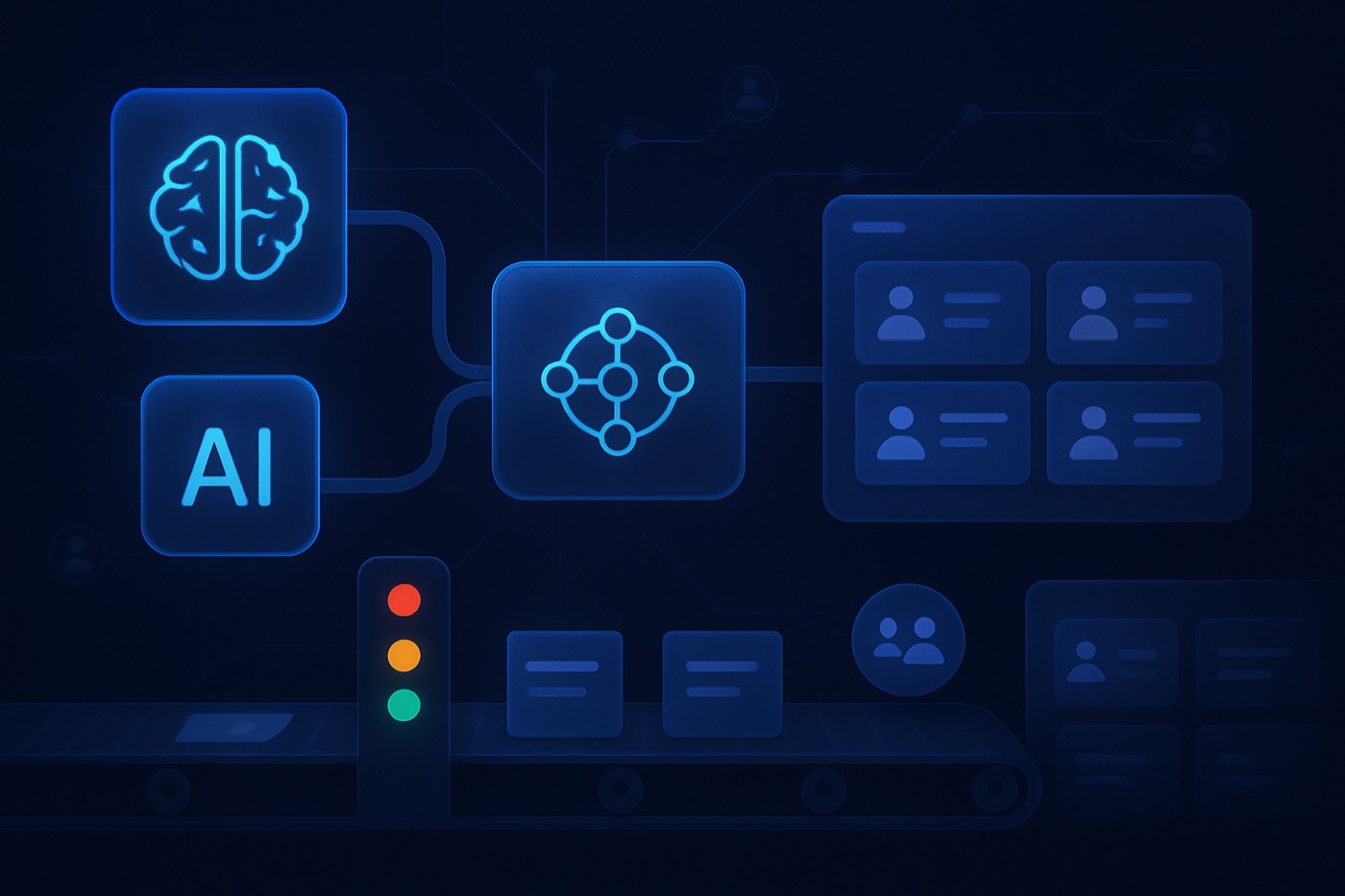
Most write-ups of Codex 5.2 vs Claude Opus stop at "which one codes better." If you run revenue, that misses the question you actually have: which model helps you do more useful outbound, qualify faster, and protect deliverability and trust, instead of just producing more text.
The short version: neither model is an outbound system. A model is an engine. It can draft, summarize, classify, and suggest. It cannot, on its own, decide who is worth contacting, guarantee the data behind a claim, throttle sends, stop a sequence when someone replies, or keep a pipeline honest. Those are jobs for the operator around the model. So the better framing is not "which model wins," but "which model fits which job, and what runs the work end to end."
This is where Chronic comes in. Chronic is an autonomous revenue operator: you give it a revenue goal, and it runs discovery, enrichment, signal scoring, outreach from managed and warmed mailboxes, reply handling, and meeting booking, surfacing approvals only for the decisions that matter. It is the system that turns model output into booked meetings, whichever model is doing the writing.
How to read the two models
Treat Codex 5.2 and Claude Opus as engines with different strengths, then match each to a job.
A quick orientation, with the caveat that vendor positioning and model versions change often, so verify current specs against the source before you build on them:
| Dimension | Codex 5.2 | Claude Opus | What it means for outbound |
|---|---|---|---|
| Marketed strength | Agentic execution, tool use, structured multi-step tasks | Long-context reading and consistent long-form reasoning | Pick based on whether your bottleneck is doing or understanding |
| Long-horizon work | Positioned for long-horizon agentic execution and context compaction | Positioned for long-horizon reasoning across large context | Both handle multi-step work, but they fail in different ways |
| Tool use | Codex CLI can run commands and edit files locally under approval modes | Enterprise tooling and parallel "agent" workflows | Codex is more execution-native; Opus leans toward synthesis |
| Sales risk | Automating before guardrails exist | Confident prose that can drift into unverifiable claims | Your operating system has to ground outputs and gate risky ones |
Sources: OpenAI's GPT-5.2-Codex release notes and Codex CLI documentation for the agentic-execution framing (OpenAI, Codex CLI docs). For Claude Opus positioning and its long-context narrative, see contemporaneous coverage (The Verge, ITPro). Treat any specific context-window or feature numbers as point-in-time claims and confirm them on the vendor's current page before relying on them.
Why the comparison even matters now
A couple of years ago, "AI for outbound" mostly meant a copy assistant, a snippet generator, or a research summarizer. The shift since then is toward agentic execution: AI that completes multi-step work, coordinates across tools, acts inside guardrails, and holds state over time.
This is not hypothetical. Large enterprise platforms moved toward autonomous agent frameworks. Salesforce, for example, describes its agents as autonomous applications that reason and take action across systems, with guardrails and escalation paths (Salesforce Agentforce). The category is clearly heading toward systems that act, not just suggest.
The practical consequence for revenue teams: the best outbound is no longer "write better emails." It is prioritizing the right accounts, personalizing with real proof, sequencing safely, keeping the pipeline current, and following up consistently. That is a systems problem, not a prompt problem.
The differences that actually touch revenue work
Here is the sales-first way to choose between the two in real workflows.
Long-horizon execution
Codex 5.2 is positioned around agentic, long-horizon execution, with improvements like context compaction and handling project-scale changes (OpenAI). That maps to outbound-ops work such as building lead-routing logic, standing up enrichment transforms, cleaning record fields, writing QA scripts for lead lists, and producing the structured artifacts a system can run.
Claude Opus is positioned around multi-step knowledge work: documents, analysis, and consistent long-form output across a lot of context (The Verge). That maps to long account plans, multi-document summaries, enablement content, and detailed objection-handling playbooks.
Takeaway: if the work ends in a concrete action or a structured output a system consumes, Codex tends to fit. If it ends in a high-context narrative (a brief, a memo, an account plan), Opus tends to fit.
Long-context reading
For outbound, long context matters when you feed a model a target account's site content, job posts, product docs, funding news, call transcripts, and prior threads, and still want consistent output. Claude Opus's long-context positioning is relevant here, for "account dossiers" and any work that needs grounding across many documents at once (ITPro).
Codex 5.2 can summarize research too, but it is marketed primarily for agentic execution rather than wide-context synthesis (OpenAI).
Takeaway: if your personalization depends on absorbing a lot of context, Opus is the stronger default. If it depends on structured enrichment fields and repeatable transforms, Codex is.
Tool use and execution
Codex is built around a "do work in an environment" loop. The Codex CLI can inspect directories, edit files, and run commands locally under approval modes (Codex CLI docs). That fits ops automation, data-hygiene scripts, and lightweight internal tooling.
Claude Opus emphasizes enterprise workflows and parallel work rather than local execution as its core identity (The Verge).
Takeaway: outbound's first need is not a fleet of parallel agents. It is one reliable agent that takes actions safely inside an operating system that can stop it.
Where hallucinations hurt
A wrong fact costs more in outbound than in a coding demo. It can invent a customer logo, claim an integration you do not have, misstate pricing, create a compliance problem, or burn sender reputation. So the winning pattern is not "pick the least hallucination-prone model." It is:
- ground outputs in verified, enriched data rather than scraped guesses,
- enforce a claims policy that defines what the AI may and may not assert,
- route risky outputs to human review automatically.
That is the job of the operator, not the model.
Best model by outbound task
| Outbound job | Default | Why | How Chronic runs it |
|---|---|---|---|
| Account research and briefs | Opus | Synthesis across many documents | Keeps the brief as structured notes tied to the account and persona |
| Persona and pain extraction | Opus | Stronger narrative nuance | Turns extracted pains into messaging angles and objection tags |
| Cold email at scale | Depends on data | Both write well; data quality decides the outcome | Enriches and scores first, then drafts under guardrails |
| Reply classification | Codex (or a smaller model) | Deterministic, structured output | Auto-stops sequences, creates tasks, updates stage |
| Field and pipeline hygiene | Codex | Structured action loops | Records next steps, updates fields, enforces required data |
| Proposal or questionnaire drafts | Opus | Long-form consistency over heavy context | Keeps answers grounded in an approved knowledge base |
In practice: reach for Opus when you are building research packs for Tier 1 accounts or need consistent writing across a long narrative. Reach for Codex when you need structured output for automation, repeatable workflows, or an agent that returns runnable artifacts.
The real problem is the system, not the model
Outbound efforts fail for the same reasons regardless of which model is behind them:
- Vague ICP. A fuzzy target means the AI personalizes confidently to the wrong people.
- Shallow data. Generic inputs produce generic output, and the model fills the gaps with guesses.
- No prioritization. Rep time and tokens get spent on low-fit accounts.
- No deliverability guardrails. Great copy that never reaches the inbox is wasted.
- No feedback loop. Replies never feed back into better targeting and messaging.
Deliverability is now a hard constraint
If you send cold email at any scale, you operate under stricter bulk-sender rules. Google published requirements for bulk senders covering authentication, easy one-click unsubscribe, and staying under a spam-complaint threshold (Google). Yahoo's sender hub states similar requirements: authentication, one-click unsubscribe support, honoring unsubscribes within two days, and keeping spam-complaint rates below 0.3% (Yahoo Sender Hub).
The implication is direct: an AI outbound effort cannot be just a writing model. It has to be an operating system that respects compliance and protects sender reputation. Chronic owns this layer, which is the point of delegating to it rather than wiring a model to a mailbox yourself.
For the deeper checklist, see the cold email deliverability checklist for 2026 and cold email compliance in 2026.
How Chronic turns a model into outbound that books meetings
Chronic sits between model capability and revenue execution. You set the goal, budget, offer, and approval level; the agent does the rest and asks only when a decision matters.
Define the ICP as a schema, not a paragraph
The model should not decide your ICP; the system should. Define it as fields, not prose: industry, employee range, region, buying role, the core problem you solve, and explicit exclusions. Add optional signals like funding stage, current tooling, and compliance needs. A schema is testable and repeatable in a way a paragraph never is.
Enrich before you write
Enrichment is where outbound is won or lost. The goal is to feed the model verified company facts, role-relevant context, real signals, and a clean contact record, not scraped guesses. If you want the minimum dataset that makes scoring and personalization work, see the data fields AI outbound actually needs.
Score, so personalization lands on the right accounts
The best personalization is wasted on the wrong account. Scoring should combine fit (ICP match), intent signals where available, timing (trigger events), and negative signals like a generic role or a bad domain. For the common traps, see why AI lead scoring fails and how enrichment fixes it.
Draft under guardrails
This is where "Codex vs Opus" gets mis-framed. Cold email rarely fails on raw writing ability; it fails on relevance, proof, specificity, and inbox-safe formatting. The guardrails that matter: no unverifiable claims, an approved proof-point library, tone presets by persona, a banned-phrase list, and variable fallbacks so a missing field never becomes a guess.
Sequence safely
Sequencing has to protect reputation: auto-stop on reply, auto-stop on bounce, throttle by domain and mailbox, rotate variants, and pause when complaint signals rise. This is how you avoid scaling your mistakes.
Keep the pipeline honest, and let the agent follow up
The work is wasted if the pipeline drifts. The agent classifies replies, schedules follow-ups, creates tasks for a human when judgment is needed, updates the opportunity, and keeps the loop running, surfacing the decisions that warrant your attention. For the broader category shift, see copilot vs AI sales agent in 2026.
A practical rollout
You do not need a quarter to get value. A low-risk sequence:
- ICP and exclusions: two or three segments, an explicit no-go list, and Tier 1 versus Tier 2 rules.
- Enrichment and required fields: persona, validated company description, one or two strong signals, time zone, and a pain hypothesis drawn from the ICP rather than invented.
- Scoring and routing: weights and thresholds. For example, high scores can launch with light review, mid scores require human QA on the first email, and low scores stay research-only with no send.
- Message library: a few angle families (pain, trigger, competitive displacement), personalization held to one or two lines that cite real enriched facts, and subject lines kept boring and specific.
- Sequence safety: stop conditions, throttles, one-click unsubscribe, fast suppression. Confirm against current Google and Yahoo bulk-sender requirements.
- QA: seed-list review for hallucinated facts, made-up integrations, compliance language, tone, and fallback behavior.
- Launch and monitor: a reply taxonomy mapped to actions. Positive creates a meeting task and moves the stage; an objection is tagged and answered from approved copy; out-of-office reschedules; unsubscribe stops immediately and updates suppression.
Keeping token spend rational
Cost runs away when you do deep research on every lead. A few rules keep it sane: only run heavy research on accounts that pass ICP filters and baseline scoring; use smaller, faster models for classification work like reply tagging and field extraction; and cache reusable context. Store your positioning, tone guide, proof points, and objection playbooks as structured assets the system references, rather than pasting them into every prompt. That also makes "approved claims only" enforceable.
The verdict
The real decision is not Codex 5.2 versus Claude Opus. It is: what is your current bottleneck, and what system converts model output into pipeline?
- Lean Codex if you are engineering-led: you will build and maintain automation, integrate data sources, and treat outbound ops like software. OpenAI's positioning of GPT-5.2-Codex around agentic execution fits that (OpenAI).
- Lean Opus if you are research-led: your edge is high-quality account research, long-context synthesis, and consistent multi-document reasoning (ITPro).
- If you are revenue-led, the model is the smaller decision. What you actually need is something that defines the ICP cleanly, enriches automatically, scores reliably, drafts safely, sequences compliantly, and keeps the pipeline current, surfacing only the choices that matter. That is what Chronic is built to do, whichever frontier model is doing the writing.
FAQ
Is Codex 5.2 only for coding?
No. It is optimized for agentic coding, but for revenue its real advantage is structured, multi-step execution: producing artifacts (tables, routing rules, transforms, scripts) that your ops can actually run. OpenAI positions GPT-5.2-Codex around long-horizon agentic work, which maps to automation-heavy outbound operations (OpenAI).
Does Claude Opus's long context matter for sales?
For specific motions, yes: Tier 1 targeting, account plans, and personalization that draws on many documents at once. Opus's long-context positioning is aimed at large, multi-document work, which can translate into better briefs and more grounded messaging (ITPro).
What is the best AI for cold email personalization?
Usually a workflow, not a single model: enrichment that produces real signals, scoring that limits personalization to high-fit leads, and guardrails that block invented claims. Both Codex 5.2 and Claude Opus can write strong outbound; the differentiator is whether your system enforces deliverability constraints like one-click unsubscribe and spam-rate discipline (Google, Yahoo Sender Hub).
Do I need an autonomous agent or just an email writer?
If you only need help drafting, an email writer can do. If you need outcomes, you need a system that classifies replies, stops sequences, logs activity, creates follow-up tasks, and keeps pipeline stages accurate. That is the direction the category is heading, as enterprise platforms ship autonomous agent frameworks (Salesforce Agentforce).
How do I stop AI outbound from hurting deliverability?
Build hard guardrails: authenticate properly with SPF, DKIM, and DMARC; support easy unsubscribe and honor it quickly; throttle volume and ramp gradually; and auto-pause sequences on negative signals. Google and Yahoo have both made bulk-sender requirements explicit (Google, Yahoo Sender Hub). Chronic owns this layer so you do not have to become a deliverability specialist to run safe outbound.
Get an outbound system audit
If you want a practical read on Codex 5.2 versus Claude Opus for your exact motion, start with the system around the model: ICP clarity and exclusions, the minimum data fields you need, enrichment coverage, scoring and routing, sequence safety and auto-pause rules, and pipeline hygiene. Chronic is the operator that turns model capability into shipped outbound and meetings booked.